
String Quartet vs. String Trio for Your Wedding: Which Ensemble Is Right for You?
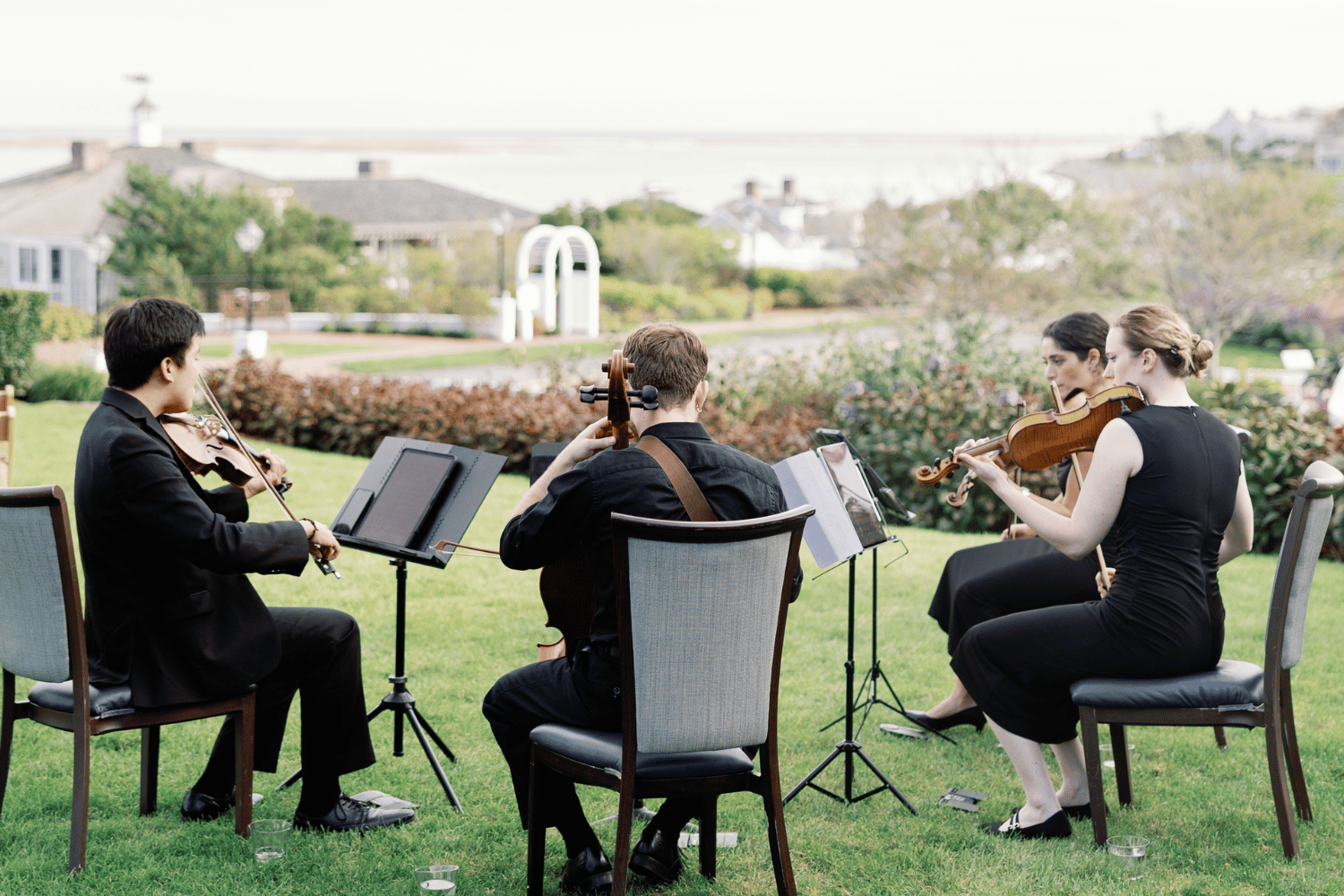
If you have started researching live wedding music anywhere from Boston to Newport to Cape Cod, you have probably run into the same question twice: quartet or trio? Both ensembles are classic, elegant choices, and both show up constantly in New England wedding photos for good reason. But they are not interchangeable, and the right pick depends on your venue, your guest count, and how much of the day you want live strings to cover.
This guide walks through what each ensemble actually sounds like, what it costs to book, and which one tends to fit better with the kinds of venues couples choose across New England, from historic estates to oceanfront tents.
Quick Answer
A string quartet (two violins, a viola, and a cello) gives you a fuller, richer sound that fills larger rooms and works well for both classical and modern arrangements. A string trio (typically two violins and a cello, or violin, viola, and cello) is a lighter, more intimate sound that suits smaller ceremonies, garden weddings, and tighter budgets. Neither is "better." They are built for different room sizes and different moods.
What Is a String Quartet?
A traditional string quartet is made up of four musicians: two violins, one viola, and one cello. This combination has been the backbone of chamber music for centuries, and it remains the most requested configuration for wedding ceremonies because it can cover an enormous range, from soft, delicate processionals to full, orchestral sounding pop arrangements.
Because you have four independent voices, a quartet can carry more complex arrangements. A cello anchors the low end, the viola fills in the harmony, and two violins can trade melody and countermelody. This is part of why quartets are the go to choice for larger receptions, ballroom ceremonies, and venues with high ceilings where sound needs room to travel, think Boston hotel ballrooms, university chapels, or the grand estates scattered across the North Shore and Newport.
What Is a String Trio?
A string trio drops one voice, most commonly leaving two violins and a cello, or a violin, viola, and cello. The result is a lighter, more intimate texture. It still carries plenty of warmth and emotion, it just takes up less sonic and physical space.
Trios tend to be the better fit for smaller ceremonies, outdoor garden settings, courthouse weddings, or any space where four musicians and their equipment would feel like a lot, think a Cape Cod backyard ceremony or a small chapel on the Rhode Island coast. Trios are also a natural fit for couples who want live strings for the ceremony only, then plan to switch to a DJ or band for the reception.
Side by Side Comparison
| Feature | String Quartet | String Trio |
|---|---|---|
| Musicians | 4 (2 violin, viola, cello) | 3 (varies: 2 violin + cello, or violin, viola, cello) |
| Sound | Full, rich, orchestral | Lighter, intimate, warm |
| Best for | Larger ceremonies, ballrooms, receptions | Small ceremonies, outdoor or garden settings |
| Repertoire range | Widest, handles complex arrangements | Slightly more limited but still versatile |
| Typical cost | Higher (one more musician) | More budget friendly |
| Setup footprint | Slightly larger | Compact, easier for tight spaces |
Sound and Space: Why Venue Matters in New England
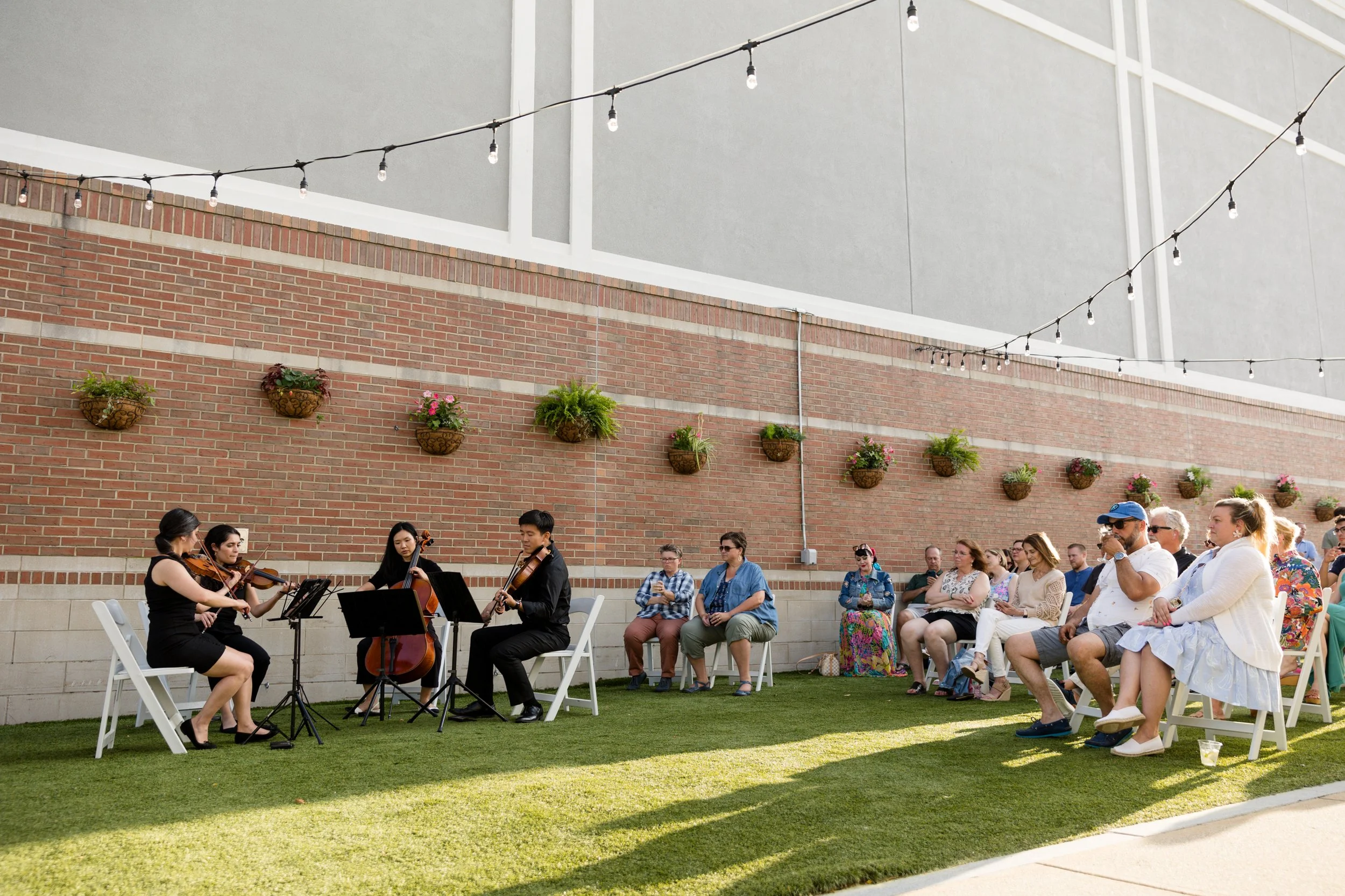
New England weddings run the full range from grand indoor estates to windswept outdoor tents, and that variety is exactly why this decision matters so much here. A string quartet fills a room with high ceilings and hard surfaces, think the Boston Public Library, a historic mansion on the North Shore, or a hotel ballroom in the Seaport. The extra voice gives the sound enough body to reach the back row without amplification.
A trio, on the other hand, often works better outdoors or in smaller, softer spaces, since open air and natural materials (grass, tents, gardens) absorb sound differently than a stone chapel or marble lobby. If your ceremony is happening on a lawn overlooking the water in Newport or under a tent on Cape Cod, a trio can sound just as full as a quartet would indoors, without the extra setup.
Outdoor New England weddings also come with a practical consideration that couples do not always think about: weather. Coastal humidity and shifting temperatures can affect stringed instruments and outdoor performance conditions, which is one more reason experienced musicians plan for weather contingencies at oceanfront and garden venues.
If you are planning an outdoor ceremony, it is worth checking seasonal weather patterns for your date and region using a resource like the National Weather Service's regional forecasts (weather.gov), so you and your musicians can plan tent placement and backup timing in advance.
Cost Differences
Cost is one of the most straightforward differences between the two ensembles. A trio has one fewer musician than a quartet, so it is almost always the more budget friendly option, often by a meaningful margin, since you are paying for one less professional's time, travel, and performance fee.
That said, cost should not be the only factor. A trio hired for a large ballroom reception may need amplification to fill the room properly, which can add rental costs back in. A quartet booked for an intimate backyard ceremony may be more sound than the moment calls for. Matching the ensemble to the venue usually gets you the best value, not just the lowest sticker price.
Repertoire: Can They Both Play Modern Songs?
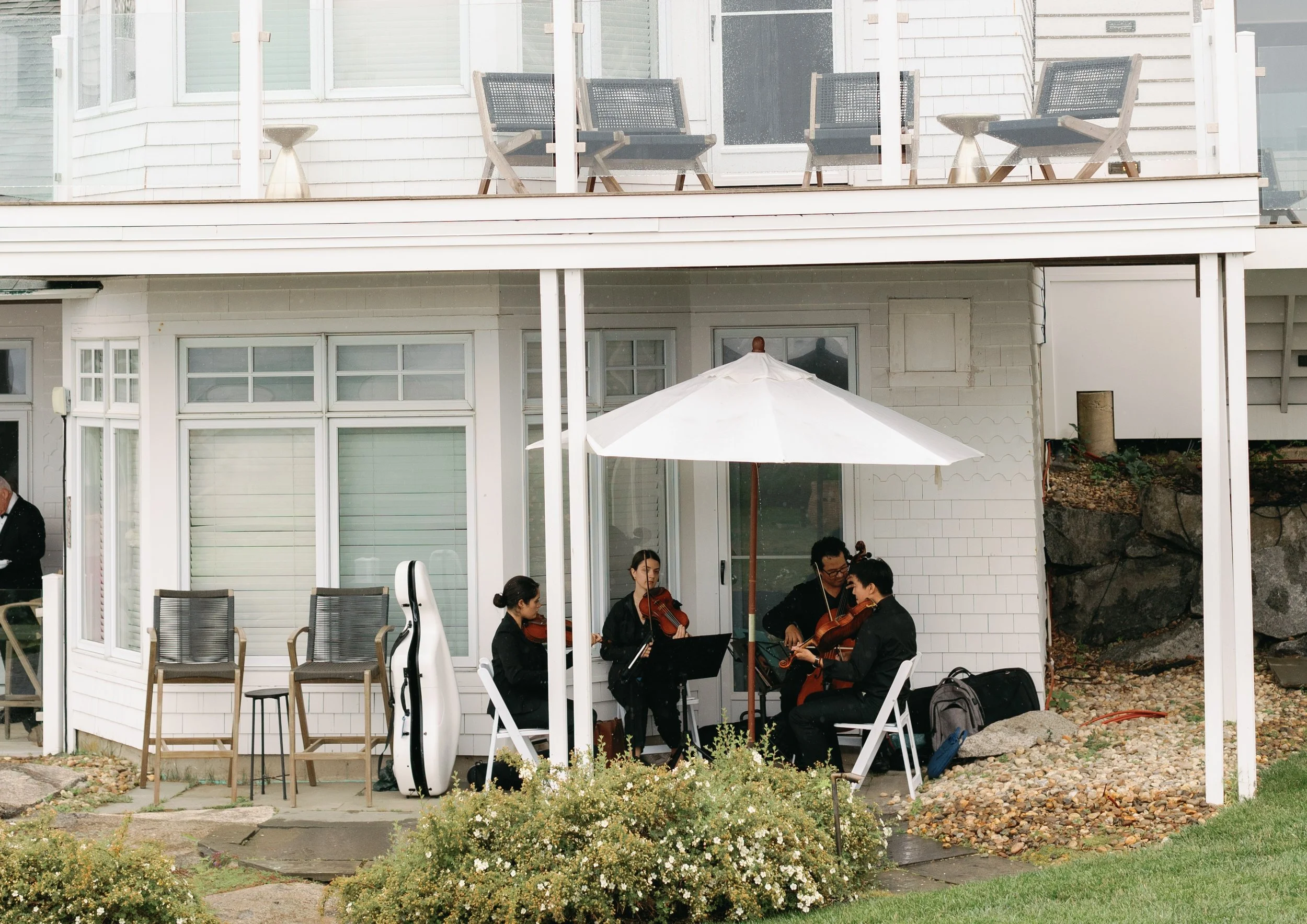
Yes. Both quartets and trios can play everything from classical processionals to contemporary pop, movie themes, and first dance songs arranged for strings. The main difference is texture. A quartet has more voices to distribute a busy arrangement across, so pop songs with layered instrumentation (strings simulating a full band sound) tend to come through with more depth in a quartet. A trio simplifies the arrangement slightly, which still sounds beautiful, just a touch more understated.
If you have a specific song in mind, whether it is a classical staple or something more modern, it is worth asking your musicians ahead of time whether it is more suited to a quartet or trio arrangement.
Which One Should You Book? A Simple Framework
Choose a quartet if: your ceremony or reception is indoors with high ceilings, your guest list is 100+, your venue is a ballroom, historic estate, or large chapel, or you want strings to cover cocktail hour and dinner in addition to the ceremony.
Choose a trio if: your ceremony is outdoors or in a smaller, more intimate space, your guest count is under 100, you are working with a tighter music budget, or you only need coverage for the ceremony itself.
Not sure yet? Many couples start their research this way and end up asking their venue coordinator or musicians directly, since acoustics vary so much from one New England property to the next. A quick walk through with your ensemble ahead of time (in person or over a call) is the easiest way to confirm the right fit.
A Note on Chamber Music History
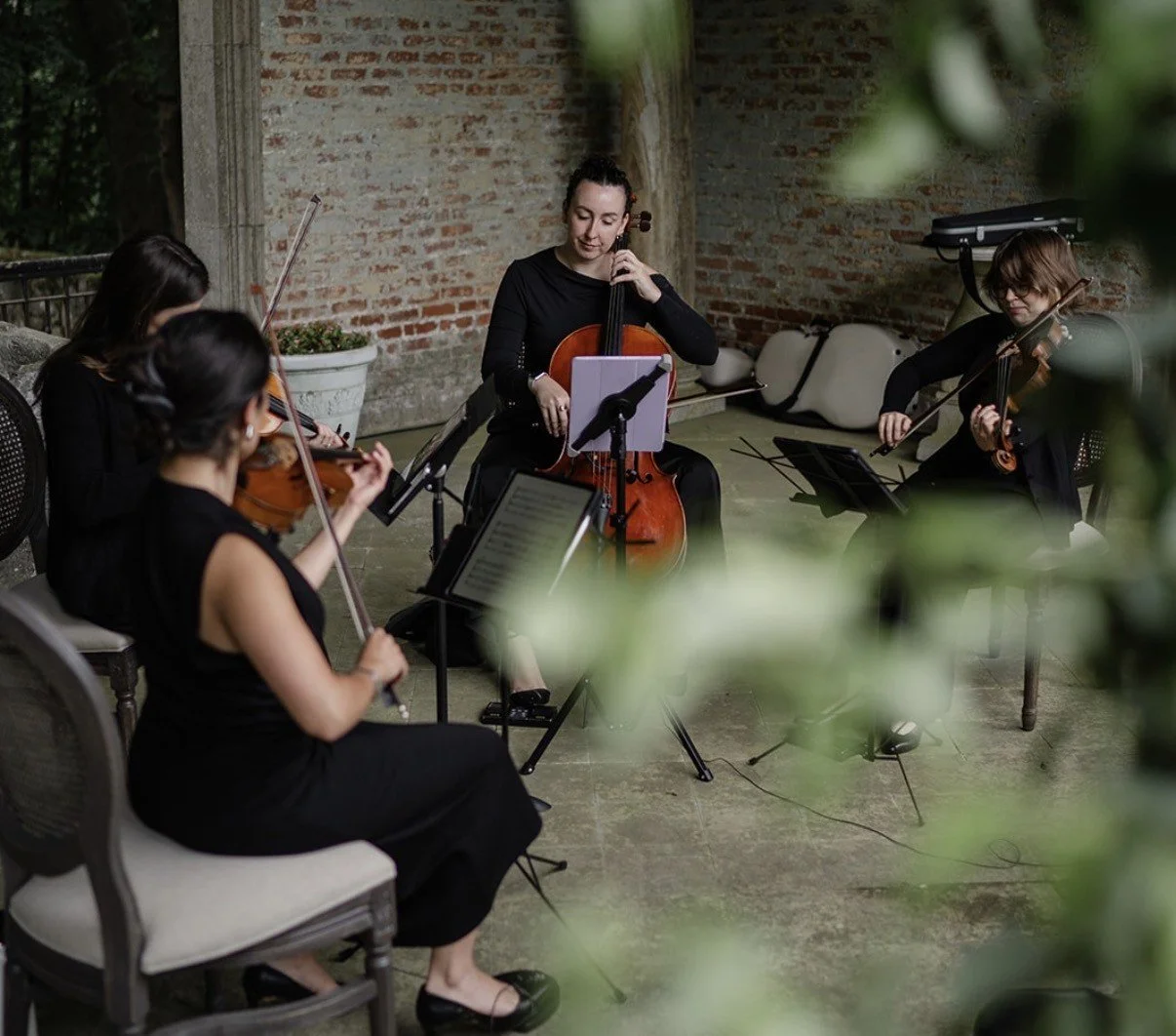
The string quartet as a musical form dates back to the 18th century and remains one of the most enduring formats in classical music, which is part of why it still feels timeless at weddings today. If you are curious about the history behind the format, the Library of Congress maintains public collections and resources on chamber music history (loc.gov) worth a browse if you want to nerd out on where the tradition comes from.
Frequently Asked Questions
-
No, it is simply a different scale. Trios are chosen for the room and mood, not as a downgrade.
-
Yes, many couples book a trio for the entire day, especially for smaller or outdoor weddings.
-
Most ceremonies do not require amplification for either ensemble, but larger outdoor spaces or big rooms may benefit from light sound reinforcement, your musicians can advise based on your venue.
-
Popular New England wedding dates, especially May through October, tend to book six to twelve months out.
Ready to Book Live Strings for Your New England Wedding?
Whether you are planning a ballroom celebration in Boston or an oceanfront ceremony on the Cape or in Newport, the right ensemble comes down to your venue and your vision. Innocenti Strings' Boston covers ensemble options across Greater Boston and the surrounding New England coast, and their wedding music guide walks through how quartets and trios are typically used across the ceremony, cocktail hour, and reception.
You can also browse audio samples of both ensembles before deciding, or get in touch to talk through what makes sense for your specific venue.