
How to Hire a Wedding String Quartet in Boston: The Complete Guide
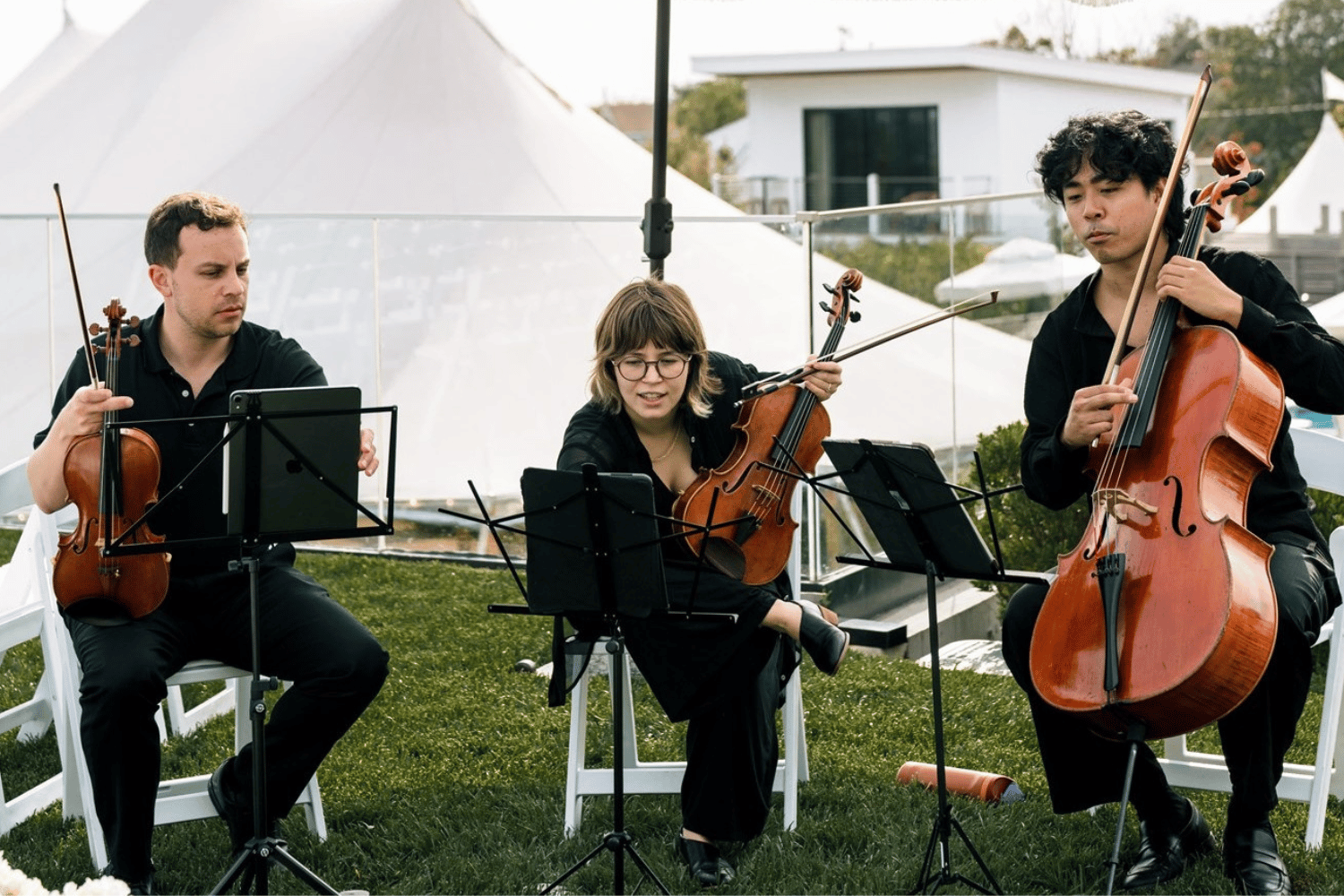
A string quartet is one of the few wedding details guests remember years later. The right ensemble sets the tone the moment the first guest sits down, carries the processional, and quietly shapes the emotional pace of the ceremony. In a city like Boston, where couples marry in Federal-era churches, Beacon Hill parlors, and Seaport rooftops within the same season, hiring wedding musicians in Boston means matching the right ensemble to a very specific kind of venue.
This guide walks through everything a couple or planner needs to know before booking: what a quartet actually costs in Boston, how far ahead to book, what questions separate a professional group from a risky one, and the local logistics, like venue sound curfews, that catch first-time planners off guard.
Why Couples Choose a Live String Quartet for a Boston Wedding
Recorded music fills a room. Live music changes it. A string quartet can read the pace of a ceremony in real time, stretch a processional if the bridal party is delayed, or soften into a quieter arrangement for an emotional reading. That flexibility is difficult to replicate with a playlist, and it matters most in the older, character-filled venues that define Boston weddings: a candlelit ceremony at Arlington Street Church, a reception in a Back Bay brownstone, or a tented affair along the North Shore.
A quartet also solves a practical problem. Many historic Boston venues restrict where speakers can be placed or cap amplified sound entirely. Acoustic strings work in these rooms without triggering those restrictions, which is one reason planners lean on live ensembles for ceremony and cocktail hour music even when a DJ or band takes over later in the evening.
What Does a Wedding String Quartet Cost in Boston?
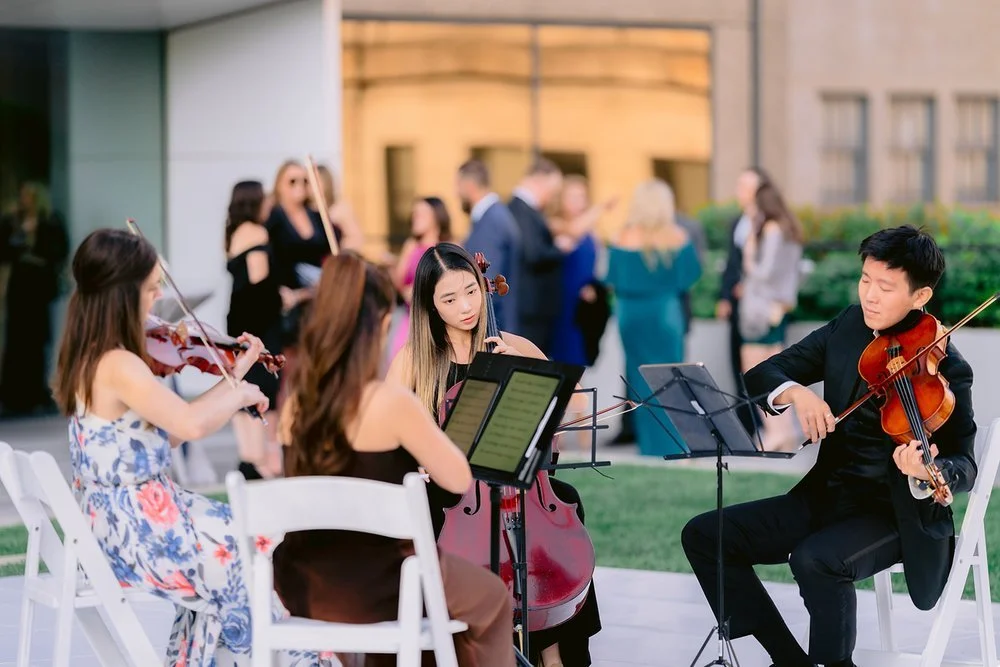
Pricing for Boston wedding musicians depends on three factors: ensemble size, performance length, and how far the group has to travel. A solo violinist or harpist sits at the lower end, a duo or trio in the middle, and a full quartet at the higher end, since a quartet involves four professional musicians, their instruments, and rehearsal time for custom repertoire.
Most Boston agencies will not publish a flat rate because the honest answer depends on the wedding itself. A city ceremony at a Beacon Hill club is a different booking than an outdoor ceremony on the Cape with load-in restrictions and tent logistics. A legitimate agency will ask about your venue and timeline before quoting a number rather than handing you a generic package price off a website.
How Far in Advance Should You Book Wedding Musicians in Boston?
Boston's wedding season runs heavily from late spring through October, and popular dates book quickly. As a general rule:
Peak season (June through October): Book your ensemble 9 to 12 months out, especially for Saturday dates at in-demand venues.
Off-peak season (November through April): 4 to 6 months is often enough, though a specific instrumentation or a well-known ensemble may still be worth securing early.
Destination style bookings in Newport, Cape Cod, or Nantucket tend to book even further ahead, sometimes 12 to 18 months, because of limited musician availability on the islands during peak weekends.
If a couple is undecided on ensemble size, most agencies are happy to walk through the difference between a quartet, trio, and duo once they know the venue and guest count.

Step by Step: How to Hire a Wedding String Quartet in Boston
Set your ceremony and cocktail hour timeline first. Musicians need to know when guests arrive, when the processional begins, and how long cocktail hour runs before quoting a package.
Confirm your venue's sound and load in rules. Older Boston venues, particularly along Beacon Hill and the Seaport, often restrict amplification or have strict load in windows. Share these details with any group you're considering.
Request a sample setlist. A professional ensemble should be able to show you sample repertoire spanning classical processionals, contemporary arrangements, and cocktail hour standards.
Ask about custom arrangements. If a family hymn or a specific song matters to you, ask early. Custom arrangements typically need more lead time than standard repertoire.
Check real experience in your specific venue type. A group that regularly performs in New England churches, estates, and tented receptions will already understand the logistics your venue presents.
Get everything in writing. Confirm ensemble size, performance length, deposit amount, and cancellation terms in a signed contract before paying anything.
Coordinate with your other vendors. Share your musicians' contact information with your planner or day of coordinator so load in, setup, and timeline changes are handled without you in the middle.
Questions to Ask Before You Book
Do you provide your own instruments and equipment, and is amplification included or an added fee?
Can you accommodate a custom arrangement or a specific family song?
Have you performed at our venue before, or a similar one?
What is your deposit and cancellation policy?
Who is our point of contact leading up to the wedding day?
A group that answers these clearly, and that has visible reviews or references from other Boston weddings is generally a safer bet than one offering a rock bottom quote with no track record.
Permits and Noise Rules for Outdoor Boston Weddings
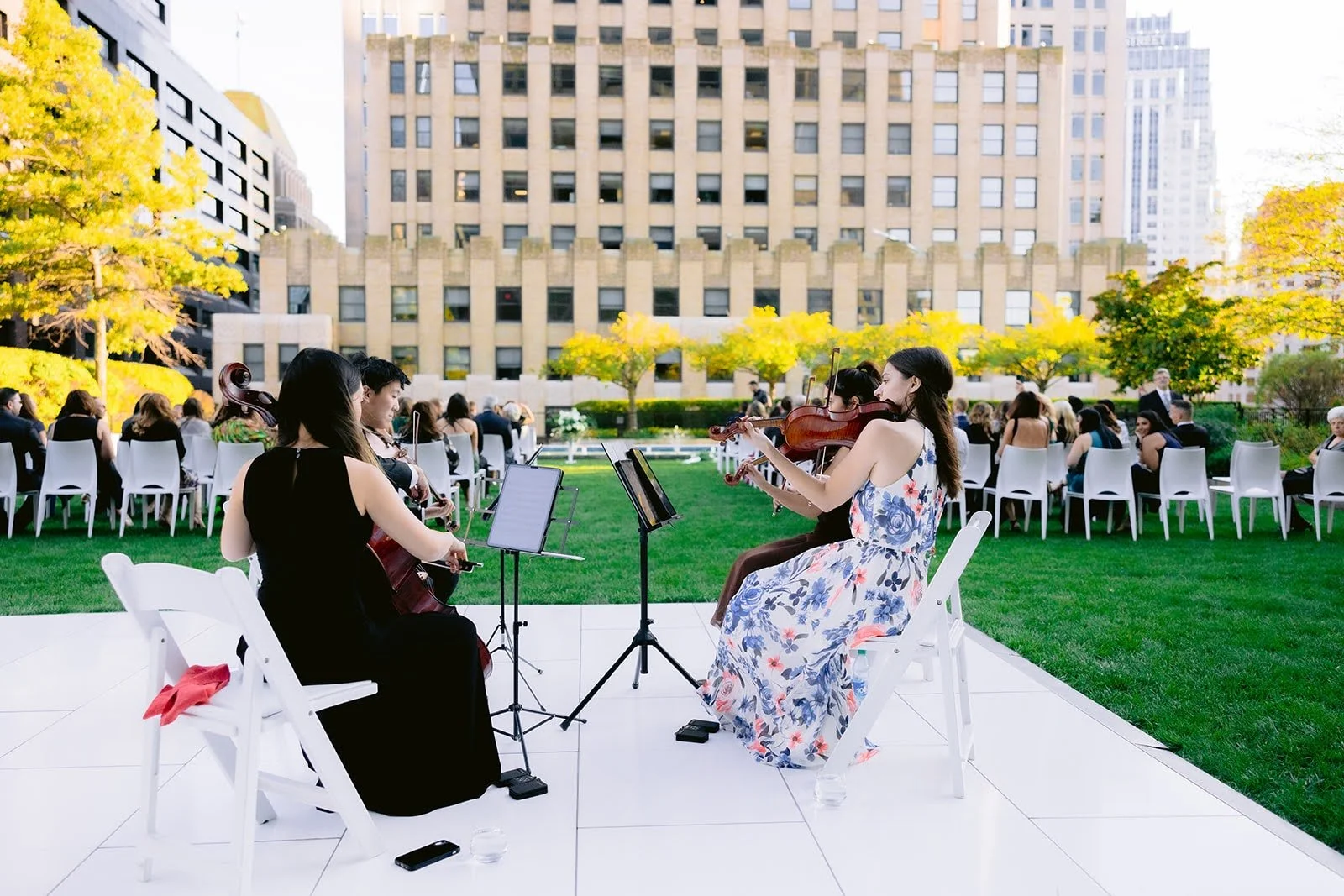
Most indoor Boston venues handle sound restrictions through their own house rules, and your musicians will typically know what to expect. Outdoor ceremonies and receptions are a different story. The City of Boston enforces a noise ordinance that limits amplified sound in public and many private outdoor spaces, and larger outdoor events may require a permit through the city before amplified music is allowed. Details on current thresholds and the permitting process are available directly from the City of Boston's entertainment licensing office.
If your reception is planned for a Massachusetts state park or reservation, a separate special use permit is required before any live music, amplified or acoustic, can take place. The application process and requirements are outlined by the Massachusetts Department of Conservation and Recreation via Mass.gov. Your venue coordinator or wedding planner can usually confirm whether your specific location falls under either of these rules, but it's worth checking early rather than discovering a restriction the week of the wedding.
Common Mistakes Couples Make When Booking Wedding Musicians
Booking too late. Waiting until a few months before a peak season date narrows your options to whoever happens to still be free.
Assuming a DJ package includes ceremony music. Many DJ contracts cover the reception only. If you want live strings for the ceremony, that's typically a separate booking.
Not sharing venue restrictions upfront. A group that doesn't know about a sound curfew or a tight load in window until the day of the wedding is set up to fail through no fault of their own.
Choosing price over experience. A noticeably cheap quote from an unfamiliar group is a common source of last minute cancellations. Ask for references and check that the group has performed at comparable venues before.
Finding the Right Fit
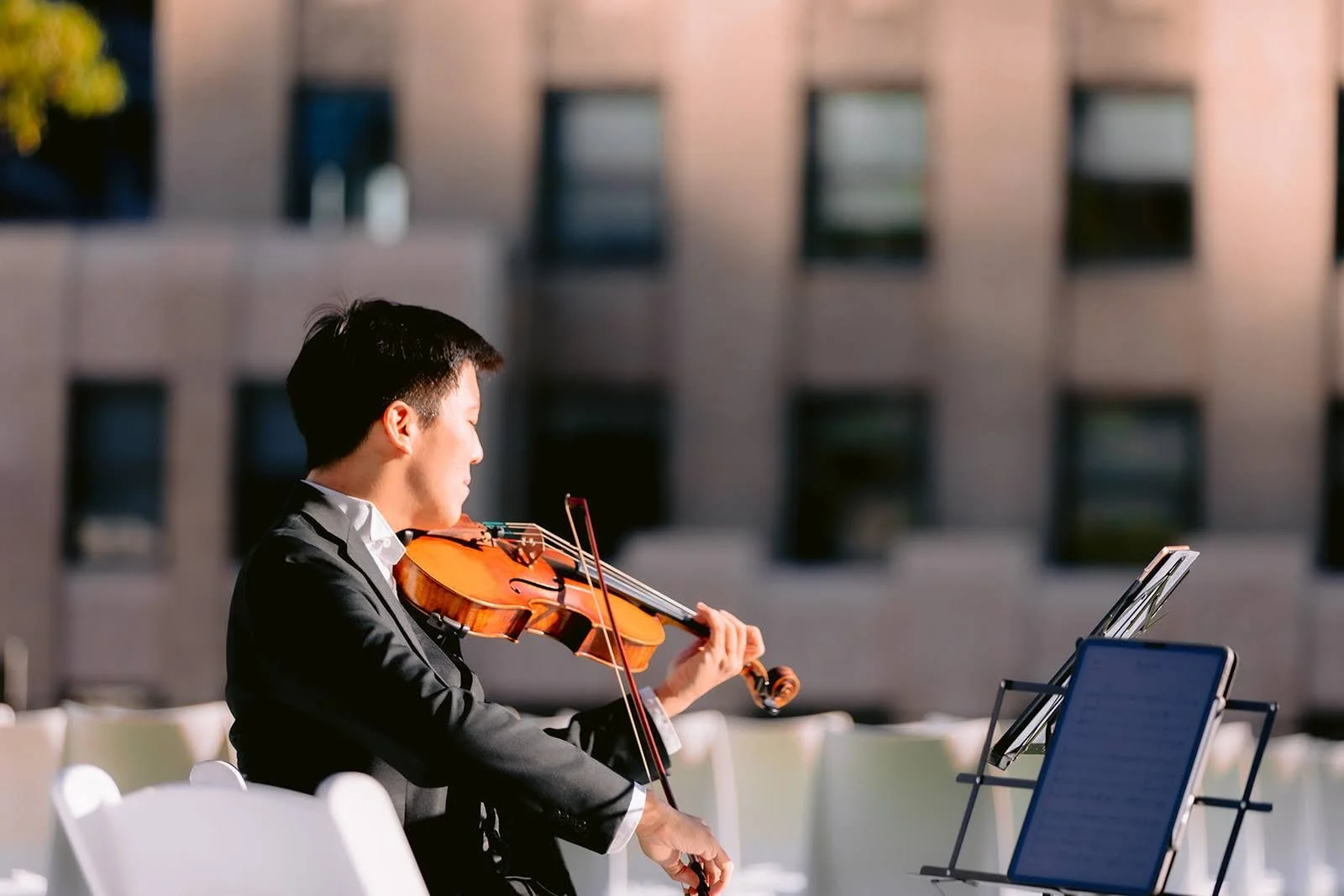
Every Boston wedding is a little different, a garden ceremony at a private estate calls for a different sound than a formal service at a downtown church, and the right ensemble size depends on the room, not a fixed package. Reviewing where a group has performed across New England and reading how past couples describe working with them is a reasonable way to judge fit before you commit to a deposit.
Frequently Asked Questions
-
Pricing varies by ensemble size, performance length, and travel, so most agencies finalize a quote after learning your venue and timeline rather than publishing a flat rate.
-
Most professional ensembles bring their own instruments and stands. Amplification and sound equipment are sometimes available for an added fee, depending on the venue's needs.
-
Yes. Many Boston couples book a quartet or trio for the ceremony and cocktail hour, then transition to a DJ or band once dancing begins.
-
It depends on the location. Outdoor events on public property or in Massachusetts state parks may require a permit, so it's worth confirming with your venue or the relevant city or state office ahead of time.
-
Nine to twelve months for peak season Saturdays is standard, with island and destination bookings often requiring even more lead time.
Ready to talk through your date and venue? Start your Boston wedding music consultation and get matched with the right ensemble for your day.