
Choosing Live Wedding Music: Quartet, Trio, or Soloist for Your Philadelphia Wedding
Music is one of the first things guests notice at a wedding, and one of the last things they remember. For couples planning a wedding across the Main Line, Bucks County, Chester County, or Center City, the real decision usually isn't whether to book live musicians. It's which size ensemble fits the venue: a full string quartet, a trio, or a soloist.
Each option carries a different presence and a different sound. Here's how Philadelphia-area families typically think through the choice, and why the right answer comes down to venue and guest count rather than a fixed package tier.
Why Ensemble Size Is a Venue Decision, Not a Budget Decision
Philadelphia weddings happen in a wide range of settings, from a stone church and clubhouse along the Main Line to a converted barn in Bucks County to a hotel ballroom near Rittenhouse Square. Each of those rooms carries sound differently, and each comes with its own set of constraints, from narrow stairwells at older Center City properties to gravel drives and generator power at countryside estates.
Glass Artists provides string quartets, trios, duos, and solo musicians for ceremonies and receptions throughout the Philadelphia region, and recommends an ensemble size based on the venue and the shape of the day rather than a set tier. That's also why popular Main Line clubs and Bucks County estates with a single wedding per weekend tend to book out twelve months or more in advance, particularly for dates between May and October.
String Quartet: The Standard for Formal Rooms
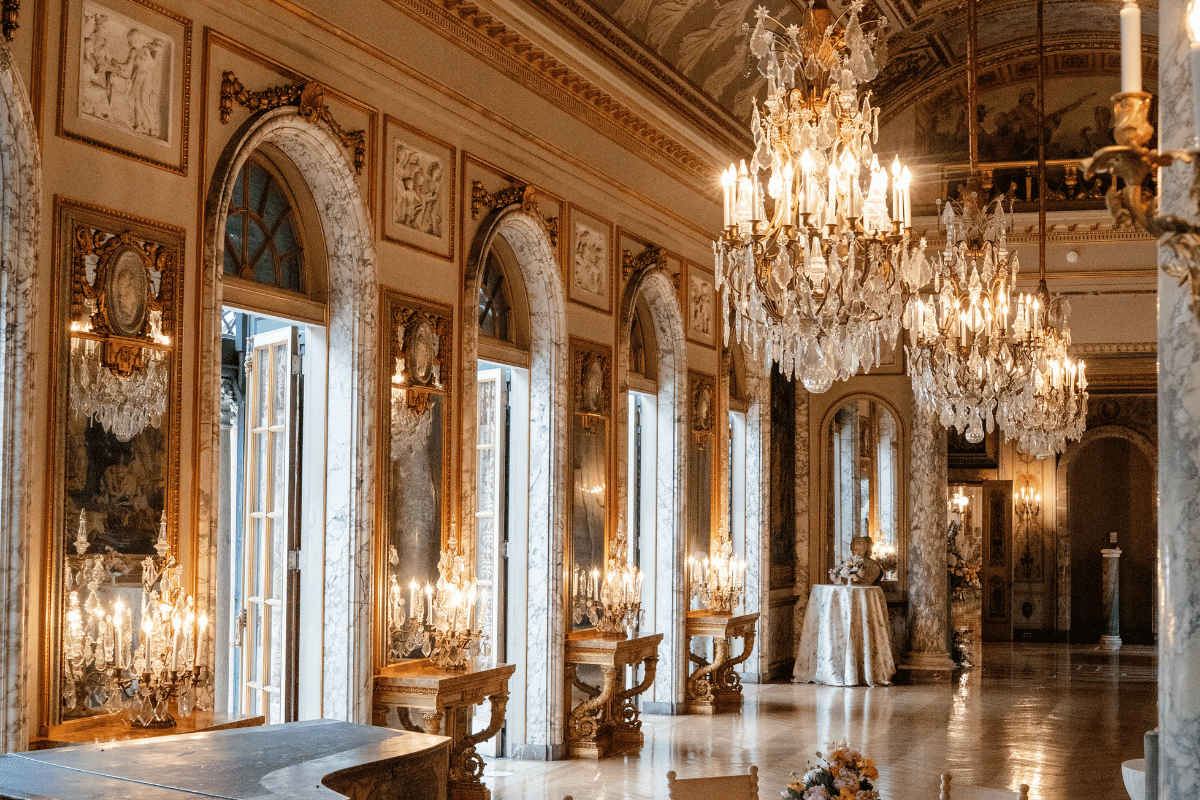
A full string quartet, two violins, viola, and cello, is close to a baseline expectation at many Main Line clubs and stone churches, where formality is assumed rather than optional. The fuller sound carries a processional and recessional in a large church, fills a tented reception without amplification, and can add real depth to a first dance or a family hymn.
A quartet tends to be the right call when:
The ceremony is in a formal church, private club, or hotel ballroom
The reception is tented or held in a large room without a stage or elevated platform
You want the same ensemble to carry both the ceremony and the reception
Your venue is a Main Line institution such as Merion Cricket Club, where a quartet is closer to expected than an upgrade
Trio or Duo: Built for Outdoor Ceremonies and Smaller Rooms
A trio or duo, typically violin and cello or violin, viola, and cello, fills a mid-sized room or an outdoor ceremony without needing amplification. It's a common choice for cocktail hour on a clubhouse terrace, then building back up to a full quartet for dinner.
A trio or duo works well for:
An outdoor ceremony at a Bucks County or Chester County estate, where load-in means gravel drives and no covered area for musicians
A smaller reception room or a clubhouse terrace
Cocktail hour, before scaling back up to a quartet for the reception
Couples who want live music without the footprint or cost of a full quartet
Soloist: For Smaller Ceremonies and Background Music
A solo violinist or harpist suits a small ceremony or a cocktail hour where the music should stay in the background rather than announce itself. It's a lighter footprint, easier to place in a tight space, and a natural fit for guest arrival music before a ceremony scales up to a larger ensemble.
Matching Your Ensemble to the Philadelphia Region
The right ensemble often changes by sub region:
The Main Line (Ardmore, Bryn Mawr, Villanova, Wayne): formal clubs and stone churches where a quartet is the norm, with a trio or duo for terrace cocktail hours
Bucks County and Chester County estates: outdoor ceremonies at properties like Aldie Mansion, where trios and duos handle uncovered load-in, building to a quartet for a tented reception
King of Prussia and West Chester: hotel ballroom weddings that call for a quartet with instrumentation that can fill a large room without a stage
Center City: historic churches and private clubs near Rittenhouse Square, where narrow stairwells and strict sound curfews shape ensemble placement and setup
If your ceremony is outdoors in a city park or another public space, it's also worth checking Philadelphia's requirements for amplified sound and event permits ahead of time. The city outlines the current process on its special event permit page.
Custom Music and Family Hymns
Many Philadelphia families choosing live music are weighing a specific request as much as ensemble size, often a family hymn tied to a particular church or a grandparent's favorite song. Custom arrangements are one of the most common requests for weddings across the Main Line, Bucks County, and Center City, and they're worth raising early so there's time to prepare the piece properly.
What Philadelphia Families Are Really Weighing
Families booking musicians for a Main Line or Bucks County wedding are usually weighing reputation and reliability as heavily as sound. Showing up prepared, coordinating directly with planners and venue coordinators, and adjusting repertoire without turning a request into a production are what keep referrals moving through Philadelphia's tighter-knit wedding circles.
When to Book
Once your venue and date are set, booking your musicians is one of the next practical steps, alongside sorting out your marriage license paperwork. Philadelphia's Register of Wills outlines the current requirements and appointment process for a marriage license.
Start Your Philadelphia Consultation
There's no single right answer between a quartet, trio, duo, or soloist. The right ensemble comes down to your venue, your guest count, and how much of the day you want live music to cover. Tell us your venue, your date, and the shape of your day, and we'll recommend the right ensemble and repertoire for it.
Reach out through our contact page or explore our full wedding musician services in Philadelphia to begin.