
Live String Quartet vs. Wedding Band: Which Is Right for Your Ceremony?
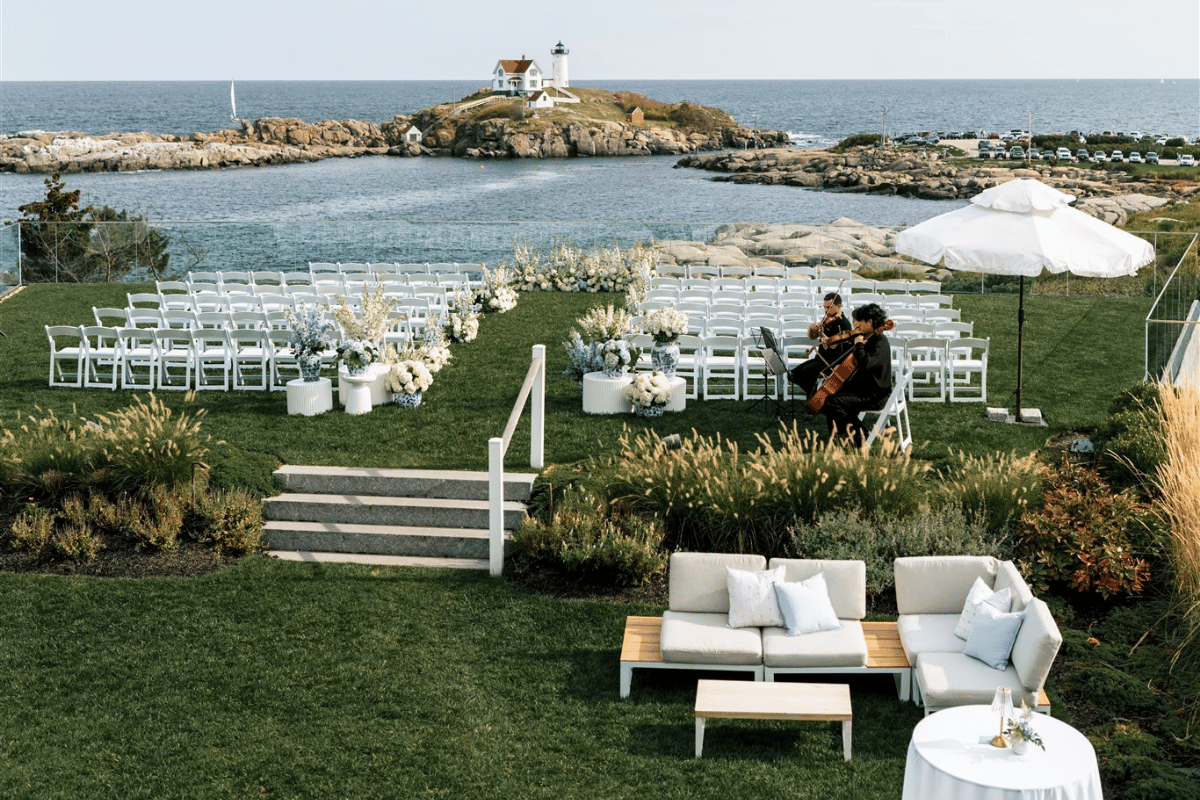
New England weddings run the gamut from a candlelit barn in the Berkshires to a lawn overlooking the harbor in Newport, and the music you choose sets the tone for every one of those settings. Two of the most requested options for couples in this region are a live string quartet and a wedding band, and while they're often compared as competitors, they actually solve different problems.
A quartet is built for intimacy, elegance, and acoustic precision. A band is built for volume, energy, and getting a room of 150 people onto the dance floor. Knowing which one your ceremony and reception actually need, rather than which one is more popular on Pinterest, is what makes this decision easier.
This guide breaks down how a string quartet and a wedding band compare across sound, space, cost, and the practical realities of hosting a wedding in New England, where historic venues, outdoor tents, and strict small-town noise rules all factor into the decision.The Short Answer
A professional wedding string quartet in New England typically runs $1,200 to $3,200 for a standard one hour ceremony performance, with most couples landing between $1,600 and $2,400. Add a cocktail hour and expect another $600 to $1,500, often discounted when booked together with the ceremony. Smaller ensembles (a duo or trio) cost less, larger ones (quintet or chamber orchestra) cost more, and destination venues on the Cape, the Islands, or in coastal Maine usually carry a travel fee on top.
What Each Option Actually Sounds Like
| String Quartet | Wedding Band | |
|---|---|---|
| Best for | Ceremony, cocktail hour, dinner | Reception, dancing |
| Typical size | 2 to 4 musicians | 4 to 12+ musicians |
| Sound profile | Acoustic, elegant, unobtrusive | Amplified, high energy |
| Space needed | Small footprint, no stage required | Stage, power access, sound check time |
| Repertoire flexibility | Classical to modern pop arrangements | Wide genre range with singalongs and requests |
| Noise ordinance fit | Rarely an issue outdoors or in residential areas | Often requires a permit or curfew check for outdoor amplified sound |
| Typical New England cost | Lower, based on set length and ensemble size | Higher, based on band size and hours booked |
| Guest experience | Sets a refined, emotional tone | Drives participation and dancing |
Ceremony Considerations: Why Most Couples Choose a Quartet
Ceremonies in New England often happen outdoors on a lawn, in a restored barn, or inside a historic church, and in all three settings, an acoustic string quartet tends to fit the space better than a full band. There's no stage to build, no sound check that disrupts the rehearsal timeline, and no risk of feedback or overpowering volume in a room built for 50 to 150 guests standing close together.
Outdoor ceremonies at private estates and vineyards also come with a practical wrinkle: many New England towns regulate amplified sound at the municipal level, and rules vary block by block rather than following a single statewide standard.
The Massachusetts Department of Environmental Protection outlines the state's underlying noise policy framework, which local boards of health and police departments then enforce through their own town-specific ordinances, so it's worth confirming what's allowed at your venue well before booking a full sound setup for a ceremony.
A quartet's naturally lower volume sidesteps most of that friction entirely, which is one reason it remains the default choice for outdoor vows across the region.
Reception Considerations: Why Most Couples Choose a Band
Once dinner ends and the dance floor opens, the calculation flips. A wedding band brings the vocal power, rhythm section, and stage presence needed to hold the energy of a 4-hour reception, read the room, and adjust the set list in real time. A quartet can absolutely play through cocktail hour and dinner, and some New England quartets offer electric or amplified arrangements for a first dance, but most acoustic ensembles aren't built to sustain a full night of uptempo dance sets the way a band is.
If your reception priority is a packed dance floor with a live vocalist taking requests, a band is generally the stronger fit for that portion of the night.
What It Costs in New England
Pricing for both options depends heavily on ensemble size, performance length, and travel to the venue, and New England's mix of destination island weddings (Nantucket, Martha's Vineyard) and mainland estate venues can push travel and setup costs higher than a typical metro booking. As a rough guide:
A string duo or trio for a ceremony typically costs less than a full quartet booked for multiple sets.
A quartet booked for ceremony plus cocktail hour is usually less expensive than a full wedding band booked for the same number of hours, largely because a band involves more musicians, more equipment, and a longer load-in.
A full wedding band's price climbs with the number of members, since musician pay is the largest line item in any live music quote. National wage data from the U.S. Bureau of Labor Statistics shows musicians and singers earn a median hourly wage in the low $40s, which helps explain why an eight-piece band costs meaningfully more than a four-piece quartet for the same event.
Ask any vendor for an itemized quote that separates performance time, travel, and equipment, since those line items are where New England pricing varies most from one town to the next.
Which One Fits Your Ceremony?
A few questions tend to settle the decision quickly:
Is the ceremony outdoors or in a historic, acoustically sensitive space? A quartet is almost always the safer, more elegant choice.
Does the venue or town restrict amplified sound? Check before committing to a band-only booking for the ceremony itself.
Do you want a dance-floor-driven reception? A band is built for that job in a way a quartet typically isn't.
Is your guest list large and spread across a tented reception? A band's amplified sound projects further and fills more space.
Is budget tight and the wedding small and intimate? A quartet or trio covers ceremony and cocktail hour at a lower cost than a full band.
Can You Book Both?
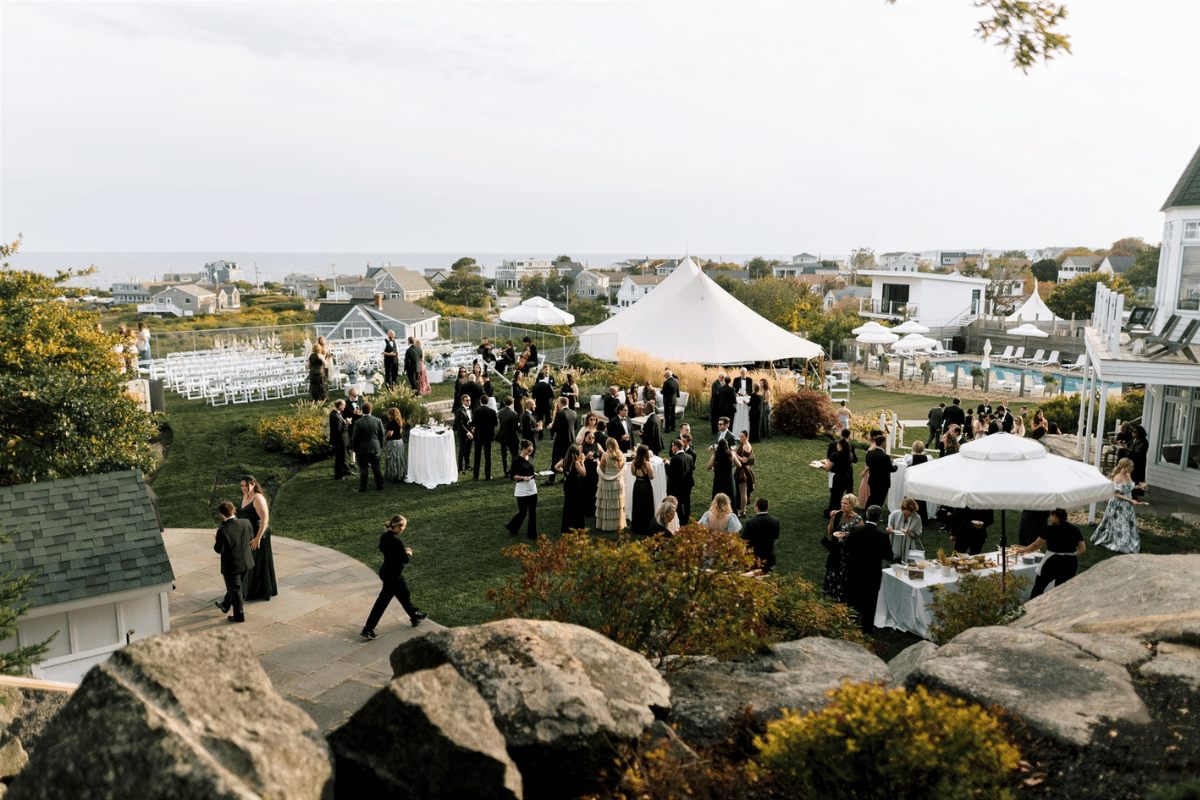
Many New England couples don't choose one over the other, they layer them. A string quartet handles the ceremony, prelude, and cocktail hour, setting an elegant tone as guests arrive, and a wedding band takes over once dinner service ends to drive the dance floor.
This is one of the most common bookings across Massachusetts, Rhode Island, and Connecticut venues precisely because it lets each ensemble do the part of the day it's actually built for.
Book Live String Music for Your New England Wedding
Glass Artists provides conservatory-trained musicians for weddings and events across New England, from Boston ballrooms to island estates on Nantucket and the Cape. Browse sample setlists to hear how a quartet, trio, or duo can be arranged for your ceremony and cocktail hour, see the full range of performance experiences offered, check where the group performs throughout the region, or start a consultation to talk through what fits your venue and timeline.
Sources cited:
Massachusetts Department of Environmental Protection, Noise Policy: https://www.mass.gov/doc/massdep-noise-policy/download
U.S. Bureau of Labor Statistics, Occupational Outlook Handbook, Musicians and Singers: https://www.bls.gov/ooh/entertainment-and-sports/musicians-and-singers.htm